


This section contains information from medical journals and articles for healthcare professionals on breathing retraining. The page is updated as new information becomes available.

Ultimately, medicine has a single aim: to relieve human suffering. When measured against this benchmark, different therapies can be seen as either effective or ineffective rather than 'orthodox' or 'unorthodox'. No single professional group has ownership of health, and the best healthcare requires a multidisciplinary approach. Thus there is an imperative for all healthcare professionals to work together for the benefit of their patients and the wider community.

Professor Marc Cohen
MBBS(Hons), PhD, BMed Sci(Hons), FAMAC
- Breathing exercises and specifically the Buteyko method are endorsed in the updated 2016 SIGN 153 – British Guideline on the management of asthma.
- A video and slides from Glenn White’s talk at the NZ Respiratory Conference 2015
- Results compiled from over 11,000 people with sleep apnoea who participated in breathing retraining programmes as taught by Buteyko Institute practitioners.
- The relationship between sleep-disordered breathing and cardiovascular risk is well documented. Now two observational studies are suggesting a strong link with increased risk of cancer.
- Dr Adelola et al. from the Department of Otolaryngology at Limerick University Hospital in Ireland investigated the effectiveness of the Buteyko technique on nasal symptoms of patients with asthma.
- Saturday/Sunday, 18 & 19 May, Auckland. Conference theme: Modern Epidemics - The Integrative Management of Cardiovascular & Auto-Immune Disease
- A report by the Agency for Healthcare Research and Quality, AHRQ, for the United States Institute of Health (NIH) finds Buteyko delivers substantial reductions in symptoms and medication usage for asthmatics.
- By Mary Birch, Australian Nursing Journal October 2012, Vol 20, No. 4, pages 40-41.
- A feature article in the May issue of the British Medical Journal; Preventing over-diagnosis: how to stop harming the healthy, claims that asthma, among a list of other complaints, may be over-diagnosed.
- Abramson MJ et al and the Victorian Asthma Mortality Study Group
AMERICAN JOURNAL OF RESPIRATORY AND CRITICAL CARE MEDICINE VOL 163 2001 - Journal of the New Zealand Medical Association, 12-December-2003, Vol 116 No 1187
- Andrea Dunai, MD, Andras P. Keszei, MD, PhD, Maria S. Kopp, MD,PhD, Colin M. Shapiro, MBBCh, PhD, FRCPC, Istvan Mucsi, MD, PhD, Marta Novak, MD, PhD SLEEP Volume 31, Issue 03, Pages 411-416
- Summary of risks from the use of Long Acting Beta Agonists (LABA) with comment from doctors at Gisborne Hospital and links to NZMJ discussion.
- The British Guideline on the Management of Asthma 2008 grants permission for British health professionals to recommend Buteyko, stating that the method "may be considered to help patients control the symptoms of asthma". The guideline also grades clinical research on Buteyko with a 'B' classification - indicating that high-quality supporting clinical trials are available.
- Some major points on the causes of Hypoxia, the Effects of Hyperventilation and Breath Holding TimesSource: King's College London tutorials
- Source: King's College London
- John G. Laffey, M.D., and Brian P. Kavanagh, M.B., The New England Journal of Medicine
- L.C. Lum, Journal of Psychosomatic Research, 1975
- Peter M Litchfield, PhD, in California Biofeedback, Spring 2003
- Dysfunctional breathing patterns are characteristic in people with asthma. This short article presents clinical trials, studies and reviews supporting the use of breathing training for asthma and a rationale for incorporating breathing retraining into asthma management.
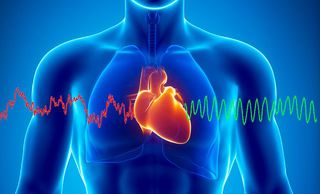
- The science linking dysfunctional breathing with cardiovascular disorders and research on the effectiveness of breathing retraining programmes in lowering blood pressure, pulmonary rehabilitation and reducing cardiovascular risk.


Medical / healthcare practices: We are happy to mail out copies of our brochures for your patients free of charge. Please contact us to arrange delivery. In the meantime, please feel free to download our brochures here:
Do you suffer from asthma or allergies? [pdf]
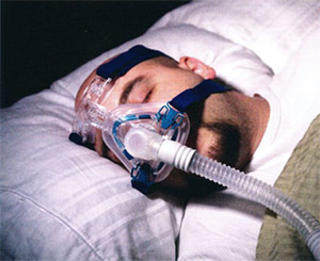
Do you snore or suffer from sleep apnoea? [pdf]
If I had to limit my advice on healthier living to just one tip, it would be simply to learn how to breathe correctly.
Andrew Weil, M.D.

